SEP Awards

2026 Howard Crosby Warren Medal
 Dr. Sabine Kastner, Princeton University
Citation: "For her groundbreaking cross-species research elucidating the rhythmic nature of attention."
The goal of our research program is to better understand how large-scale networks operate during cognition, with particular emphasis on interactions between cortex and thalamus. We use the visual attention network as a model network. Currently, we are particularly interested in studying the dimension of time. Cognitive function unfolds over time by setting up rhythmically alternating network states. We study these issues in two primate brain models, the human and the macaque monkey, using an integrated and complementary methods approach of invasive electrophysiology (intracranial electrophysiology in human epilepsy patients, in collaboration with Bob Knight, UC Berkeley, and simultaneous multi-site recordings in monkeys) with several brain imaging modalities (functional magnetic resonance imaging, diffusion tensor imaging).
2026 Norman Anderson Lifetime Achievement Award
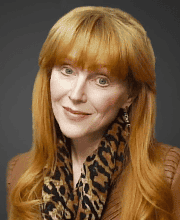 Dr. Morton Ann Gernsbacher, University of Wisconsin-Madison
Citation: "For her original and important contributions, both wide and deep, spanning multiple areas including the cognitive processes underlying language comprehension, the cognitive and neural processes associated with autism, and both scientific communication and innovative teaching methods."
Moton Ann's research focuses on the cognitive processes and mechanisms that underlie language comprehension. She has challenged the view that language processing depends upon language-specific mechanisms, proposing instead that it draws on general cognitive processes such as working memory and pattern recognition. Motivated by the diagnosis of her son in 1998, much of her research has focused on the cognitive and neurological processes of autistic people.
2026 Early Investigator Award
 Talia Konkle, Harvard University
Talia Konkle's research focuses on the cognitive and neural organization of high-level visual experience: how do we see and understand the visual world around us? She employs a combination of behavioral techniques, human functional neuroimaging and computational modeling approaches to characterize representational spaces of the mind and discover how they are mapped onto the surface of the brain. Talia has been an assistant professor at Harvard since 2015 and was promoted to fully tenured professor, effective January 1, 2023. She received her Ph.D. from MIT in Cognitive Science and did her undergraduate work at UC Berkeley in Cognitive Science and Applied Math.